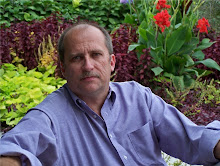
Finally, some common sense from a coal-state Senator.
Sen. Robert Byrd, the longest serving Senator in history, calls it as he sees it. If only someone would listen.
Thursday, December 03, 2009
Wednesday, December 02, 2009
Sparks, anyone?
Why do cars have ashtrays?
I know people smoke, but really: Why do cars have ashtrays? If you've ever ridden in a car with a smoker, you know they don't use the ashtray. They roll the window down just a crack, and stick the tip of the cigarette out to knock off the ashes.
If you've ever been behind a car with a smoker in it, you know they seldom put the cigarette out in the ashtray either. They just shove the damn thing out the window.
Of the few who do use the ashtray, most only use it for temporary storage of the butts. As soon as they get to a parking lot, they pour the contents out on the pavement beside the drivers' door.
So again I ask, "Why do car's have ashtrays?" What they really need is smoke alarms.
I know people smoke, but really: Why do cars have ashtrays? If you've ever ridden in a car with a smoker, you know they don't use the ashtray. They roll the window down just a crack, and stick the tip of the cigarette out to knock off the ashes.
If you've ever been behind a car with a smoker in it, you know they seldom put the cigarette out in the ashtray either. They just shove the damn thing out the window.
Of the few who do use the ashtray, most only use it for temporary storage of the butts. As soon as they get to a parking lot, they pour the contents out on the pavement beside the drivers' door.
So again I ask, "Why do car's have ashtrays?" What they really need is smoke alarms.
Labels:
environment,
Envrionment,
rants,
Smoking
Wednesday, November 18, 2009
2012: The end is not in sight

Somehow, certain elements of this country have gotten their theologies and their politics even more confused than usual.
A number of the religious faithful, particularly Christian conservatives, have decided that the world will end in 2012. To be more precise, they believe the world will officially end at 11:11 a.m. Greenwich Mean Time on December 21, 2012. CNN, which is pushing the prophesy (and the cheesy B-movie), plans to cover the event extensively and is rumored to already have pundits standing by to analyze the end of the world for the following 12 months, culiminating in a one-year anniversary special called "Mayan in America" set to air on 12/21/2013.
Believers are basing this prediction either on a 5,000-year-old calendar developed by the priests of the Mayan Sun God, or on their fervent belief that Sarah Palin will be elected president a month earlier. I'll buy the premise that a Palin presidency would mean the end of the world, but I'm not buying that there is a snowball's chance in Teotihuacan of there ever being a Palin presidency.
Ironic, isn't it? Either the Christian end of the world prophesy is foretold by Sun-worshipping pagans, or it's going to be brought about by their li'l darlin' Sarah. You betcha.
You see, the Mayans developed several different calendars about 5,000 years ago. One (the more accurate one) was based on a 365-day year; one was based on a 260-day gestational year; and the grand-prize winner that hundreds of regular nutcases and the CNN News staff believe predicts the end of the world, was based on 360-day years stacked one on top of another to equal the 5,125-year "Great Cycle." This last calendar is known as the "Long Count."
The web site "Great Dreams" does a great job of explaining these various calendars, but the most important thing to remember is that no one is quite sure how to count the "Long Count." Depending on which "expert" you consult, the Great Cycle might end on Dec. 21, 2012, or it might have ended a couple of years ago.
If the end of the Great Cycle really does signify the end of the world and the people who voted for the earlier dates were right, then disregard this blog post. We've all been Left Behind.
Personally, if we're set on the end of the Great Cycle predicting catastrophe, I'm voting for setting it at Jan. 20, 2001. I know that's not on the list, but it seems me to be as good a date as any other. I'm relatively sure Al Gore is with me on this one.
Whatever the actual end date, true experts aren't prediciting a catastrophe; they're predicting a new Great Cycle. You see what no one is telling people, is that this is the first Great Cycle, which actually predicts an alignment of planets and galaxies. When it ends, anyone still using the Mayan calendar will rip off the last page and go back to the beginning -- just like we do when December 31 rolls around. And it's expected to be ripped off four more times until the end of the "Grand Year" in another 20,500 years.
Will the world end then, at the end of the Grand Year? I vote yes. After all, no one reading this is going to be around then to say I was wrong.
Wednesday, October 28, 2009
Two arrested in alleged Danish terror plot

It's not really a close call, but it still makes you think.
Federal authorities have arrested two men in connection with an alleged terrorist plot to be carried out in Copenhagen, Denmark. The first arrest occurred a day before I left for the Danish capital.
The FBI arrested David Coleman Headley at Chicago’s O’Hare Airport on Oct. 3. Police say he had espoused the view that the Danish newspaper that published cartoons of the Prophet Muhammed should be punished, and had met in Pakistan with members of Harakat-ul Jihad Islami, a group the U.S. government says has ties to Al Qaeda and Lashkar-e-Taiba, a Pakistani terrorist group.
Agents also arrested Tahawwur Hussain Rana, a Canadian citizen.
Headley, who the FBI says was bound for Pakistan again, was carrying video of the newspaper entrance and Copenhagen Central Station, the city’s main train station. The station was about a five minute walk from my hotel, and the station where I arrived from the airport and departed on my way out of Denmark.
Federal authorities have arrested two men in connection with an alleged terrorist plot to be carried out in Copenhagen, Denmark. The first arrest occurred a day before I left for the Danish capital.
The FBI arrested David Coleman Headley at Chicago’s O’Hare Airport on Oct. 3. Police say he had espoused the view that the Danish newspaper that published cartoons of the Prophet Muhammed should be punished, and had met in Pakistan with members of Harakat-ul Jihad Islami, a group the U.S. government says has ties to Al Qaeda and Lashkar-e-Taiba, a Pakistani terrorist group.
Agents also arrested Tahawwur Hussain Rana, a Canadian citizen.
Headley, who the FBI says was bound for Pakistan again, was carrying video of the newspaper entrance and Copenhagen Central Station, the city’s main train station. The station was about a five minute walk from my hotel, and the station where I arrived from the airport and departed on my way out of Denmark.
Monday, October 12, 2009
A sad statement
Back on the ground in the states, and it was a jarring landing. Not the airplane – that was great. I mean the realization that our security procedures in this country are way more intrusive and aggravating than they need to be.
Getting on the plane in Denmark, I passed through three security checkpoints and a passport control station, showing my passport at each spot. The metal detectors were easy. I had to take literally everything out of my pockets, but I got to keep my shoes on, and no one frisked me. The screeners were always very friendly and courteous.
I got to Atlanta, and U.S. Customs and Border Protection agents greeted me with smiles and a “welcome home” as I went through passport control. Agents at baggage claim and the agriculture check station were very courteous as their dogs sniffed my bags and they asked the required questions about food items, and my visit to a farm.
Then I got to the TSA. That was end of smiles and courtesy.
First, the woman at the x-ray machine snarled at me for not laying the paper bag with my duty-free items flat, and for putting my shoes in a basket rather than directly on the conveyor. Then I forgot to take my belt off before I went through the metal detector. I have only one thing to say to Mr. Sideburns-and-Beer-Gut manning that machine: Being a jerk doesn’t make my travel any safer. It just makes me write a hostile blog.
And it wasn’t just me. They were universally nasty to everyone who passed through.
I realize that we’ve been attacked here, and I realize that we need security. But how much is too much?
While in Denmark, I had the chance to visit two government offices – the Center for Green Transport and the Climate and Energy Ministry. At the Green Transport building, we had only to walk through open front door and up the stairs to a receptionist.
A minister is essentially like a cabinet secretary in the U.S., though Danish ministers also serve in Parliament. Going to Minister Connie Hedegaard’s office required no sniffing, no metal detector and no snarling security officers in paramilitary uniforms. We walked through a glass door by the receptionist, and were then shown upstairs to her office.
That same night, during Copenhagan’s annual Kulturnatten (Night of Culture), hundreds and possibly thousands of people wandered through Minister Hedegaard’s private office, shaking hands and making small talk with her. There was not even one guy in sunglasses, dark suit and ear piece. And Connie Hedegaard, as nearly as I can tell, is the Hillary Clinton of Denmark.
Just as refreshing was the trip to Amalienborg Palace, home of Queen Margrethe and the Royal Family. No gates, no fences, no concrete barriers. Cars drove through the palace courtyard unimpeded. The only guards in view were a handful of Royal Life Guards, one at each of several small guard stands along the outer walls of the courtyard. In their bearskin hats and 18th century-style uniforms, they stood in front of small guardhouses and stared straight ahead, making no move to stop, question or search tourists and citizens coming into the palace yard.
The White House, on the other hand, is surrounded by an iron fence, concrete barriers and a very conspicuous police and Secret Service presence. No one drives through the gate or walks through the gate without an invitation.
How did we get to this place in our country? Presidents used to let the masses into the White House on Inauguration Day, one even had his clothes stolen while skinny dipping alone in the Potomac River.
It’s a sad statement on the world climate that our president, an officer elected by the people, has become more secluded and more guarded than a European monarch.
Labels:
Customs and Border Protection,
Denmark,
Energy,
environment,
Envrionment,
Sam Adams,
terrorism,
TSA
Friday, October 09, 2009
Random shots in the dark

It's my last night in Denmark, and I'm too tired to put together a very coherent blog. Here are some random thoughts on the week.
- The bike lanes in Copenhagen really are a safety necessity. On streets that don't have them, cyclists will run down innocent pedestrians without blinking. More than once, I saw guys pedaling madly through the middle of crowds at Kulturnatten, an annual festival of Danish Culture that draws probably hundreds of thousands of walkers onto the streets to bounce from one museum to another.
- Cab drivers in Copenhagen are crazy. Take a train.
- Finding a train station in Copenhagen is easy. You walk approximately 8 kilometers to your destination and the station is across the street. The other end is in an undisclosed location.
- The letter 'd' is pronounced like the letter 'l' unless it's at the beginning of a word. The letter 'r' is pronounced like you have fish bone caught in your throat no matter where it appears in the word.
- There are more than 200 places to see during Kulturnatten. They're all on a map that will show you how to walk in a circle without finding the one you're looking for.
- Given a choice of visiting an art museum, Danish Parliament, or the Danish Design Center, Copenhageners will crush each other getting into the milk and cheese exhibit in the agriculture building.
- A kroner is like a miniature dollar. It's shorter and it buys less. If you go, take a wheelbarrow.
Once again, for a more serious look at Denmark go to http://greenindenmark.bloginky.com.
Wednesday, October 07, 2009
A burger is a burger, but a smørrebrød is an adventure

I have seen only one Danish restaurant since I arrived in Copenhagen on Monday morning.
There are Indian restaurants, Middle Eastern restaurants, Turkish restaurants, Greek restaurants, Thai restaurants, Mexican restaurants, joints that sell pizza and kabobs, and Italian cafes, but you don’t see much down home Danish cooking.
So far, the only ethnic place I’ve eaten in was a Thai restaurant in an alley off Vesterbrogade, after which I was afraid to breathe near the sprinklers in my hotel room. The peppers were hot enough for me to light the way back to the hotel just by opening my mouth.
But with the dearth of Danish Restaurants, I have still eaten true Danish food several times now. The Danes are nothing if not hospitable.
I spent much of this morning listening to an in-depth discussion of insulation, during a meal of what can only be described as gourmet smørrebrød.
For those of you who haven’t looked it up yet or haven’t been to Denmark, smørrebrød (pronounced something like “shmoorbrool”) can be almost anything
I first took it to mean the same as the Americanized word Smorgasbord, which is a corruption of the Swedish meaning “belly up to the trough and eat everything you see.” The translation for smørrebrød, however, is something like “all-you-can-eat-of-everything-the-cook-couldn’t-find-enough-of-for-a-full-meal-but-could-put-together-to-make-a-full-meal-on-one-slice-of-rye-bread.”
And it’s cold.
Today, smørrebrød included a couple of pieces of smoked salmon with dill, some sort of ham, spiced sausage called rullepølse made from rolled up meats sliced thin enough to read through, cooked onions, a mushroom, some pieces of roasted tomato, a piece of cheese, a piece of rare steak, a spoonful of caramelized nuts, a slice of cinnamon apple and several things I could not identify, but tried anyway. The idea is to put as much of that as possible on a piece of bread.
Yesterday it was sliced roast turkey, cucumbers, tomatoes, orange slices, lemon, lime, parsley, beets, a liver paté, some boiled shrimp, boiled eggs, yogurt, beef, some thinly sliced cured pork, and several other things that I couldn’t identify.
These were food combinations I would never have thought of. The surprising thing is, it’s really good. It has also opened up entirely new possibilities for me when I get home.
“I don’t need to go the store, honey, we can have smørrebrød.”
As long as we have bread, I’m on solid ground with that argument.
So far, the only ethnic place I’ve eaten in was a Thai restaurant in an alley off Vesterbrogade, after which I was afraid to breathe near the sprinklers in my hotel room. The peppers were hot enough for me to light the way back to the hotel just by opening my mouth.
But with the dearth of Danish Restaurants, I have still eaten true Danish food several times now. The Danes are nothing if not hospitable.
I spent much of this morning listening to an in-depth discussion of insulation, during a meal of what can only be described as gourmet smørrebrød.
For those of you who haven’t looked it up yet or haven’t been to Denmark, smørrebrød (pronounced something like “shmoorbrool”) can be almost anything
I first took it to mean the same as the Americanized word Smorgasbord, which is a corruption of the Swedish meaning “belly up to the trough and eat everything you see.” The translation for smørrebrød, however, is something like “all-you-can-eat-of-everything-the-cook-couldn’t-find-enough-of-for-a-full-meal-but-could-put-together-to-make-a-full-meal-on-one-slice-of-rye-bread.”
And it’s cold.
Today, smørrebrød included a couple of pieces of smoked salmon with dill, some sort of ham, spiced sausage called rullepølse made from rolled up meats sliced thin enough to read through, cooked onions, a mushroom, some pieces of roasted tomato, a piece of cheese, a piece of rare steak, a spoonful of caramelized nuts, a slice of cinnamon apple and several things I could not identify, but tried anyway. The idea is to put as much of that as possible on a piece of bread.
Yesterday it was sliced roast turkey, cucumbers, tomatoes, orange slices, lemon, lime, parsley, beets, a liver paté, some boiled shrimp, boiled eggs, yogurt, beef, some thinly sliced cured pork, and several other things that I couldn’t identify.
These were food combinations I would never have thought of. The surprising thing is, it’s really good. It has also opened up entirely new possibilities for me when I get home.
“I don’t need to go the store, honey, we can have smørrebrød.”
As long as we have bread, I’m on solid ground with that argument.
Read a more serious account of Denmark and ways to fight climate change at Going green in Denmark, my blog on kentucky.com/greenspot.
A more serious side to Denmark

Just a reminder that you can read a more serious account of my trip to Denmark at http://www.kentucky.com/greenspot. The blog there is called Going Green in Denmark.
The latest post is on wind energy and democracy on the island of Samso. Later today, I'll be posting something on energy-efficient housing.
Later still, I'll post the day's or week's absurdities and stream of consciousness here.
See below for a post on speaking Danish to Danes.
Labels:
Denmark,
Energy,
environment,
Envrionment,
Sam Adams
Irritatingly polite
OK, I’ve done it now. I’ve pissed off the Danes.
Before leaving home, I decided that I would not be one of THOSE Americans. You know the ones I’m talking about – the ones who assume everyone in every country should speak English, and we, being from the greatest superpower on earth, should not be required to learn their language.
So in late spring, I downloaded a free language software called BYKI, and started learning Danish. A week ago, looking into the so-called Copenhagen Card that allows tourists to travel on buses and the subway and visit museums free (after buying the card), I was very pleased with myself when I was able to read the Danish web site enough to understand the requirements. Then I went off happily to the airport and boarded a flight for Copenhagen. All was well with the world.
When I arrived, my first stop was the train ticket office.
“Hej. Jeg vil gerne til Vester Søgade,” I said.
The ticket agent, ever the polite Dane, answered with a smile and a ”Hej!” (hello), and said something back to me. What she said totally evaded me, so I fell back on a tried and true phrase.
“Jeg forstår ikke. Kan du engelsk?”
The clerk frowned at me. “Of course I speak English.”
I got my ticket, but she seemed rather annoyed.
Again at the information desk at Copenhagen Central Station, I asked, “Kan du engelsk?” Again the annoyed look, and the clerk promptly switched languages and gave me directions to my hotel.
I vowed not to ask the stupid question again, but I still wanted to be as polite as possible, so I approached the hotel desk with the appropriate phrase: “Jeg har lavet en reservation.”
The clerk nodded, asked my name and I replied in Danish. That’s as far as I got. She spoke the rapid-fire language and I must have looked befuddled, because she certainly looked concerned. I quickly employed my most useful phrase: “Jeg forstår ikke,” (I don't understand). This time, I decided it best not to ask if she could speak English, I just made it clear that I was ignorant of the language. “Jeg er amerikaner,” I explained.
Again, a quick switch to English, but this time with no annoyance. “Have you been to Denmark before?” I told her I had not, and got a surprised look back. “How did you learn to speak Danish???”
I vaguely answered, got my key and went to my room. I’ve got the hang of this, I thought. Off to get some dinner that night, I walked past the strip clubs on Gammel Kongevej to a 7-11. (Side note: there are approximately 7,711 of these within a 100-yard radius of my hotel.)
The Indian clerk had locked the door to go the restroom, but he gestured for me to wait and came back to let me in momentarily, greeting me in Danish. I didn’t attempt an answer, simply nodding and saying, “Tak,” (thanks) as he opened the door for me. I was perusing the glass case of sausages when he finally asked a question in Danish that required an answer. So I again employed my favorite Danish phrase.
“Jeg forstår ikke. Kan du engelsk?”
Again the annoyed look. “Of course,” he said with a flawless British accent and pointed again at the sausages. “Would you like a hotdog?”
After two days here, I now know that Danes not only speak English, they speak it better than I do. Apparently, so do Indians who live in Denmark. Even the waitress and the manager at the Thai restaurant where I had dinner last night speak English better than any Asian I’ve ever seen in America.
Camilla Steffensen, a spokeswoman for Dansk Energi, explained it to me in her near perfect American accent. Danes begin learning English in school in third grade. They already hear it from their parents and in businesses all around them. Also, there are only 5 million Danes and the language is difficult anyway. They have to know other languages to communicate with the rest of the world.
And finally, the most important reason: “We watch a lot of American television.”
I’ve also learned that the advice a well-traveled friend gave may be more appropriate than I thought. The friend, a former U.S. vice consul to India, said there is one phrase Americans should learn in the language of every country they plan to visit.
“Don’t shoot – I’m a Canadian.”
Before leaving home, I decided that I would not be one of THOSE Americans. You know the ones I’m talking about – the ones who assume everyone in every country should speak English, and we, being from the greatest superpower on earth, should not be required to learn their language.
So in late spring, I downloaded a free language software called BYKI, and started learning Danish. A week ago, looking into the so-called Copenhagen Card that allows tourists to travel on buses and the subway and visit museums free (after buying the card), I was very pleased with myself when I was able to read the Danish web site enough to understand the requirements. Then I went off happily to the airport and boarded a flight for Copenhagen. All was well with the world.
When I arrived, my first stop was the train ticket office.
“Hej. Jeg vil gerne til Vester Søgade,” I said.
The ticket agent, ever the polite Dane, answered with a smile and a ”Hej!” (hello), and said something back to me. What she said totally evaded me, so I fell back on a tried and true phrase.
“Jeg forstår ikke. Kan du engelsk?”
The clerk frowned at me. “Of course I speak English.”
I got my ticket, but she seemed rather annoyed.
Again at the information desk at Copenhagen Central Station, I asked, “Kan du engelsk?” Again the annoyed look, and the clerk promptly switched languages and gave me directions to my hotel.
I vowed not to ask the stupid question again, but I still wanted to be as polite as possible, so I approached the hotel desk with the appropriate phrase: “Jeg har lavet en reservation.”
The clerk nodded, asked my name and I replied in Danish. That’s as far as I got. She spoke the rapid-fire language and I must have looked befuddled, because she certainly looked concerned. I quickly employed my most useful phrase: “Jeg forstår ikke,” (I don't understand). This time, I decided it best not to ask if she could speak English, I just made it clear that I was ignorant of the language. “Jeg er amerikaner,” I explained.
Again, a quick switch to English, but this time with no annoyance. “Have you been to Denmark before?” I told her I had not, and got a surprised look back. “How did you learn to speak Danish???”
I vaguely answered, got my key and went to my room. I’ve got the hang of this, I thought. Off to get some dinner that night, I walked past the strip clubs on Gammel Kongevej to a 7-11. (Side note: there are approximately 7,711 of these within a 100-yard radius of my hotel.)
The Indian clerk had locked the door to go the restroom, but he gestured for me to wait and came back to let me in momentarily, greeting me in Danish. I didn’t attempt an answer, simply nodding and saying, “Tak,” (thanks) as he opened the door for me. I was perusing the glass case of sausages when he finally asked a question in Danish that required an answer. So I again employed my favorite Danish phrase.
“Jeg forstår ikke. Kan du engelsk?”
Again the annoyed look. “Of course,” he said with a flawless British accent and pointed again at the sausages. “Would you like a hotdog?”
After two days here, I now know that Danes not only speak English, they speak it better than I do. Apparently, so do Indians who live in Denmark. Even the waitress and the manager at the Thai restaurant where I had dinner last night speak English better than any Asian I’ve ever seen in America.
Camilla Steffensen, a spokeswoman for Dansk Energi, explained it to me in her near perfect American accent. Danes begin learning English in school in third grade. They already hear it from their parents and in businesses all around them. Also, there are only 5 million Danes and the language is difficult anyway. They have to know other languages to communicate with the rest of the world.
And finally, the most important reason: “We watch a lot of American television.”
I’ve also learned that the advice a well-traveled friend gave may be more appropriate than I thought. The friend, a former U.S. vice consul to India, said there is one phrase Americans should learn in the language of every country they plan to visit.
“Don’t shoot – I’m a Canadian.”
Subscribe to:
Posts (Atom)